Markdown Font

You can parse Markdown in our tables to format the text in not just rows and columns, but individual cells. If your data contains Markdown or if you added it in step 2: Check & Describe, make your formatting visible with checking 'parse Markdown' in the Refine tab in step 3: Visualize:

What is Markdown?
Markdown is a markup language that makes it easier than HTML to format your text. In HTML, you'd need to use <b> and </b> to make text appear bold. In Markdown, you just use asterisks, like so: *something in bold*, and it will appear in your browser as something in bold.
Markdown editors are intuitive and lightweight text-to-HTML conversion tools for web content writers. You can use them to format lists, headers, and for emphasis. We took a deep dive into markdown editors to highlight the best available. I've discovered the reason why the Bebas Neue font did not work in your markdown block. It's in several parts. (1) To use the TypeKit (and Google) fonts as provided on Squarespace, one must use the Style Editor thereby making broad changes to whole use categories, i.e., body text, nav font, etc.
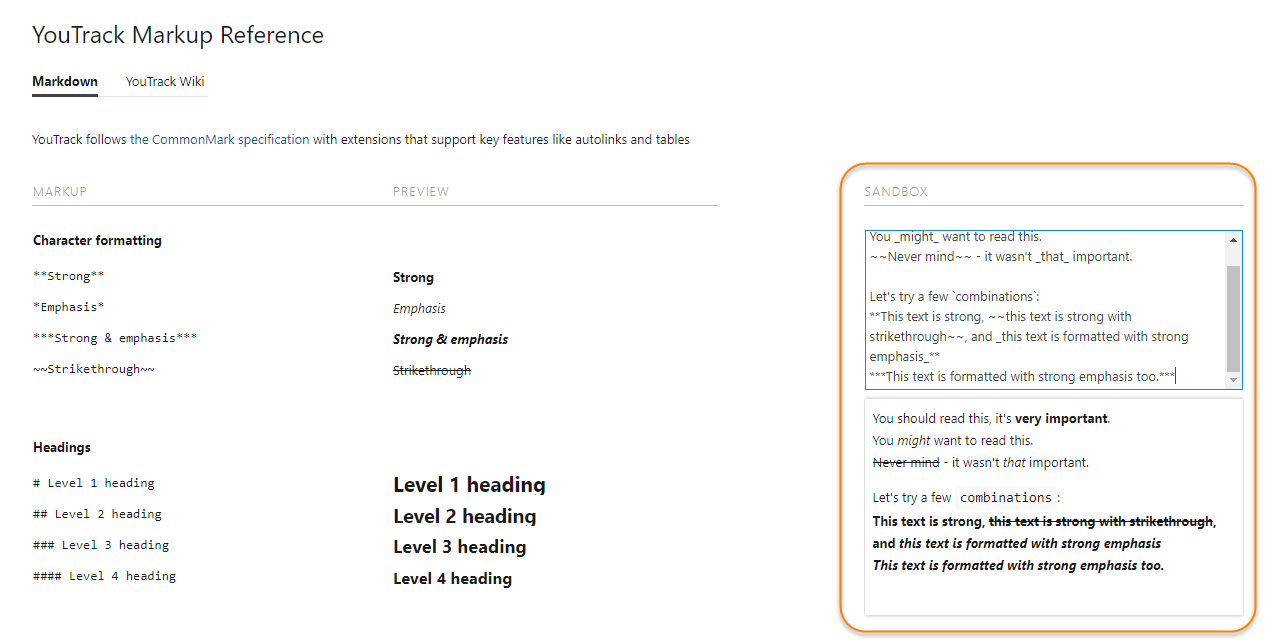
Markdown expressions you can use in Datawrapper tables
Datawrapper uses the common Markdown syntax, plus two additional expressions to make your tables more readable (the 'small note' and the 'line in header'). Here's an overview. Scroll to the end of this article to learn how to bring Markdown formatting into your tables.
| Effect | Markdown | How it will look like in your table |
| Bold | **Haiti** __Haiti__ | |
| Italic | *Cuba* _Cuba_ | |
| Small note | Puerto Rico ^United States^ | |
| Monospace | `Trinidad and Tobago` | |
| Link | [Jamaica](https://en.wikipedia.org/wiki/Jamaica) | |
| Image |  *To increase the size of the image, increase the font-size of the column from Step 3: VIsualize or wrap the markdown in a <span> tag and give it some style (e.g. <span;></span>) | |
| Line in header, connecting merged cell. | ~~~2018~~~ |
Where to write Markdown
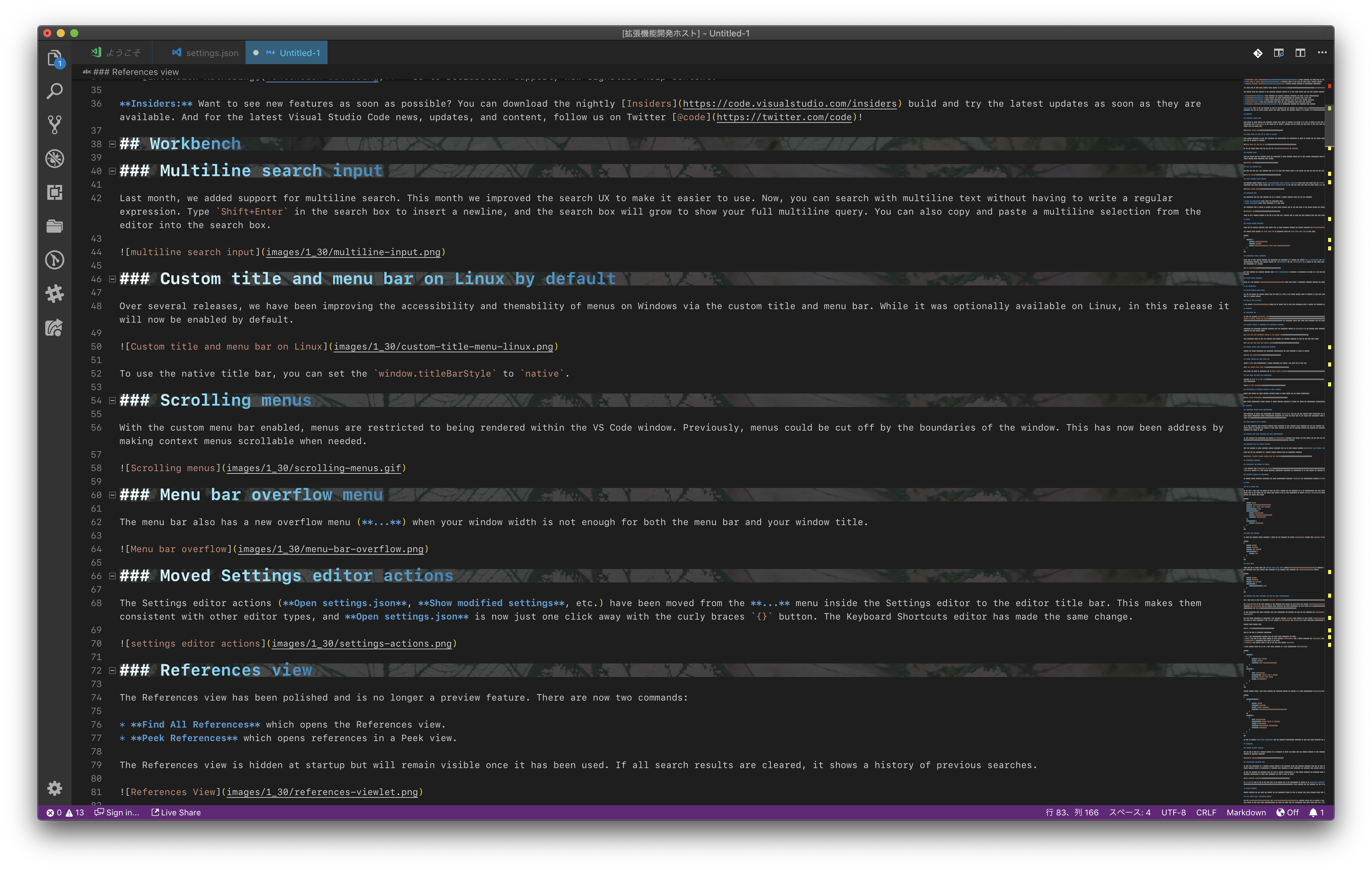
To achieve these effects above, you will need to write Markdown in the data you upload or paste to Datawrapper, or in step 2: Check & Describe. Just click in a data cell you want to edit, and add some Markdown syntax from above.
5.1 Font color
The Markdown syntax has no built-in method for changing text colors. We can use HTML and LaTeX syntax to change the formatting of words:
For HTML, we can wrap the text in the
<span>tag and set color with CSS, e.g.,<span>text</span>.For PDF, we can use the LaTeX command
textcolor{}{}. This requires the LaTeX package xcolor, which is included in Pandoc’s default LaTeX template.
Markdown Bold
As an example of changing the color in PDF text:
In the above example, the first set of curly braces contains the desired text color, and the second set of curly braces contains the text to which this color should be applied.
If you want to design an R Markdown document for multiple output formats, you should not embed raw HTML or LaTeX code in your document, because they will be ignored in the other output formats (e.g., LaTeX code will be ignored in HTML output, and HTML tags will be lost in LaTeX output). Next, we provide two possible methods to deal with this issue.
5.1.1 Using an R function to write raw HTML or LaTeX code
We can write a custom R function to insert the correct syntax depending on the output format using the is_latex_output() and is_html_output() functions in knitr as follows:
Markdown Font Color Jupyter
We can then use the code in an inline R expression `r colorize('some words in red', 'red')`, which will create some words in red (you will not see the red color if you are reading this book printed in black and white).
5.1.2 Using a Pandoc Lua filter (*)
This method may be a little advanced for R users because it involves another programming language, Lua, but it is extremely powerful—you can programmatically modify Markdown elements via Pandoc’s Lua filters (see Section 4.20). Below is a full example:

In this example, we implicitly used a Pandoc Markdown extension named bracketed_spans, which allows us to write text with attributes, e.g., [text]{.class attribute='value'}. The Lua filter defined in the cat code chunk7 puts text in <span></span> if the output format is HTML, and in textcolor{...}{} if the output format is LaTeX. The Lua filter is written to a file color-text.lua, and enabled through the command-line option --lua-filter passed to Pandoc via the pandoc_args option of the output formats.
Compared to the previous method, the advantage of using the Lua filter is that you can still use Markdown syntax inside the brackets, whereas using the R function colorize() in the previous section does not allow Markdown syntax (e.g., colorize('**bold**') will not be bold).