Extended Forks For Forklift

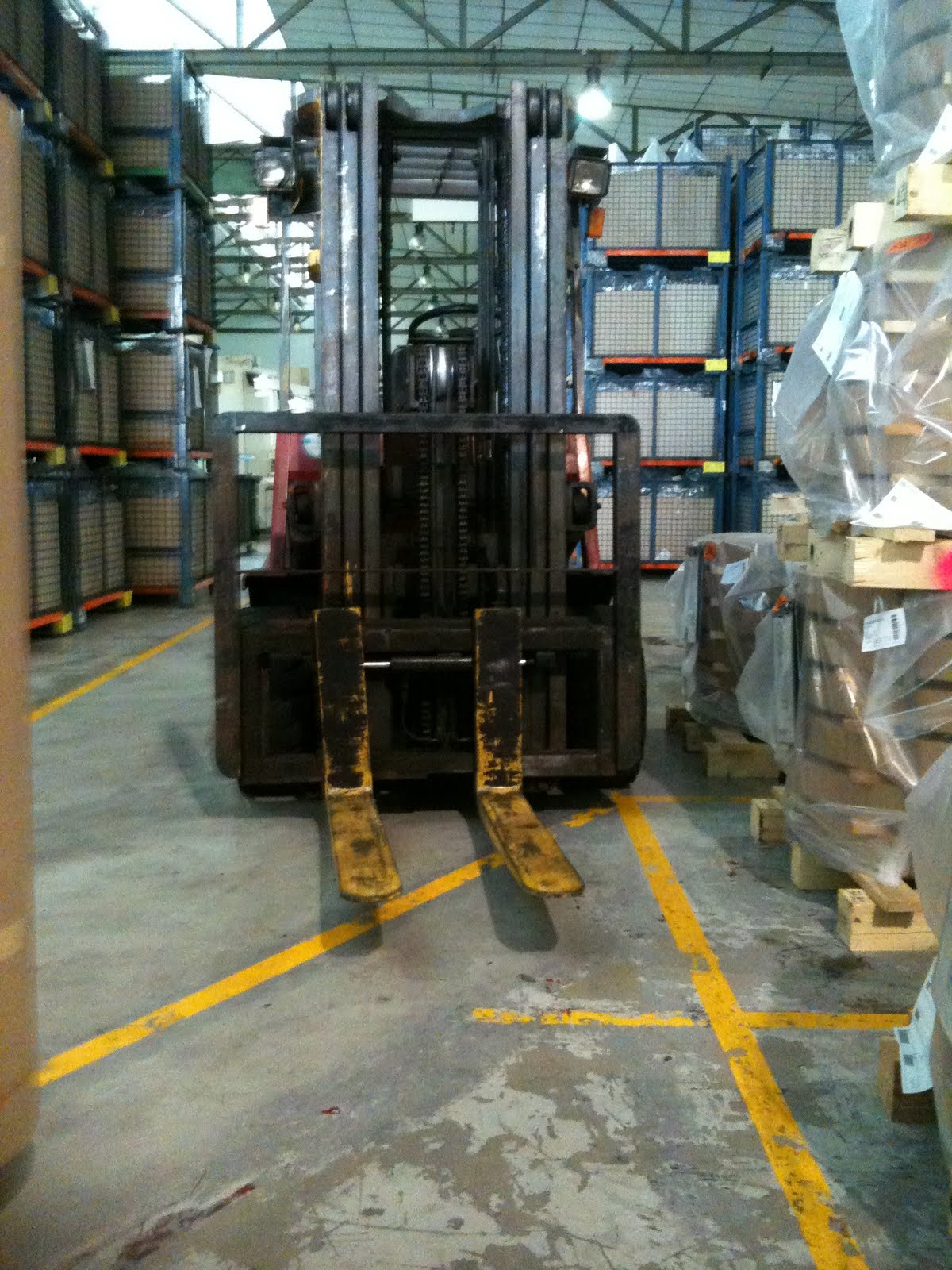
Forklift lifting capacity with extended load centre
I have been asked to include this information on the website. How do you calculate the new, reduced, lifting capacity when the load centre is increased on a forklift truck?
On the above sketch the dimensions are as follows:
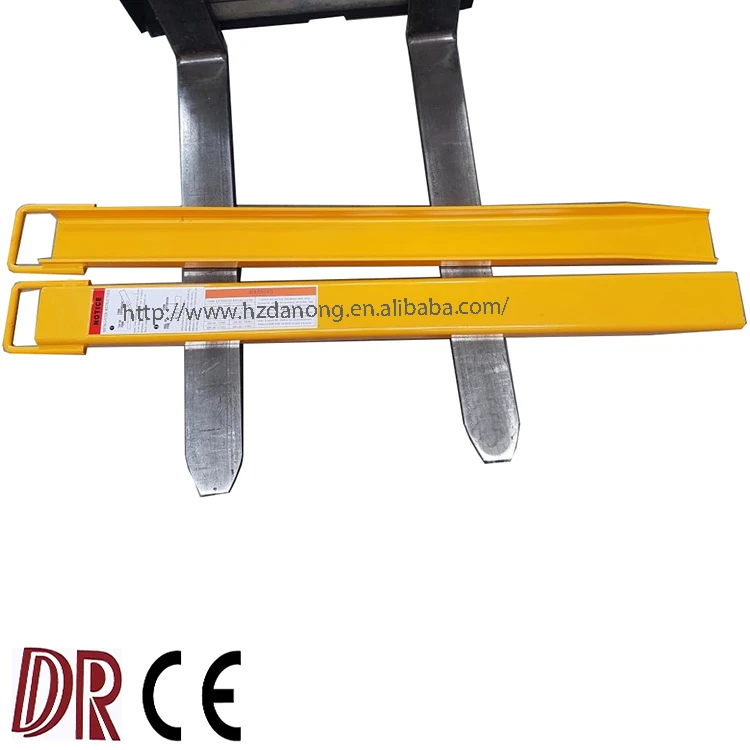
Fork Extensions Stretch your forklift's reach with these handy slip-on extensions. Slides easily onto existing forks. Fits forks up to 2' thick. Forklift Fork Extensions Forklift Fork Extensions Extend Fork Length 50% for Improved Material Handling. Forklift Fork Extensions are made with heavy duty steel and have a welded safety heel restraint to provide long lasting durability. Durable safety yellow or red powder coat finish offers high visibility. Fits fork widths 4', 5' and 6'. Quick and easy to fit, fork extension sleeves are designed to extend the trucks “normal” length forks, allowing long or out of reach loads to be handled. Features: (i) heavy duty pressed construction, (ii) tapered and shaped tips and (iii) rounded edges. This Extension Fork provides the industrial style forklift additional fork length. This unit has a length of 5-6' and allow the unit to handle wider loads. Forklift extension for industrial type forklifts; 5-6' length. Forklift Fork Extensions. Forklift Fork Extensions Extend Fork Length 50% for Improved Material Handling. Forklift Fork Extensions are made with heavy duty steel and have a welded safety heel restraint to provide lon.
- L is the dimension from the middle of the front wheel to the front face of the forks with the mast vertical. (cm)
- X is the truck's load centre, (usually 50 cm)
- Q is the normal rated capacity of the forklift truck in Kg.
It is important that the calculations are done from the fulcrum of the truck, i.e. the centreline of the front wheels. System sensor driver. Therefore we add L and X together to get to the 90 cm shown above.
Now the load of 2000 kg is multiplied by the distance of 90 cm, 2000 x 90 = 180,000 (this is in Kg/cm)
As an example let's say the load centre is increased by 6 cm to 56 cm.
The new load centre of 56 cm needs to be added to L in order to get back to the drive wheel centreline, i.e. 56 + 40 cm = 96 cm.
Now the 180,000 above is divided by this dimension so:
180,000/96 = 1875. The cm cancel out and the new capacity is 1875 Kg.
Please note that the effects of the weight of attachments have been ignored for these capacity calculations but obviously may have to be taken into account.
Please also note that if the load centre is reduced, it does NOT follow that the forklift's capacity is increased. It may do, but the strength of the forklift's components such as forks, lift chains etc may be compromised. Always check any alteration to capacity with the forklift manufacturer and remember the capacity rating plate may need altering.
People who don’t work with forklifts all the time often assume that there is only one type of forks that fit onto lift trucks. There are actually many different types of forks, most of which are interchangeable depending on how you plan to use your forklift.
Fork Types
Forklifts can different types of forks. Here are 11 forklift fork types:
Standard ITA Forks — These are the types of forks most often found on standard forklifts. But even standard forks come in different lengths, widths, depths, and capacities. It’s important to know your vehicle’s capacity before installing new standard ITA forks onto your mast.
Folding Forks — These forks are hinged so they can fold up to allow the vehicle to maneuver in tight spaces, such as elevators.
Carpet Poles — Single extended poles that are used to lift heavy carpet rolls.
Fork Extensions — Fit onto to standard forks to extend their length for handling longer loads.
Shaft Forks — These are used to suit all pin type carriages.
Lumber and Plywood Forks — Feature a forged heel, square heel, single taper or double taper.
Tire and Barrel Forks — Feature semi-circular cutouts mid-fork to accommodate the lifting of barrels, drums, and tires.
Drivers advance vission. Coil Handling Forks — Feature a contoured blade to lift handle coils. Warning: The capacity may be reduced depending on the size of the contour.
Block Forks — Specially designed to accommodate the safe handling of bricks and construction blocks.
Spark Retardant Forks — Made from non-sparking materials for use in hazardous locations and atmospheres, such as those with combustible gasses of materials.
Forklift Extensions For Sale
Non-Current Forks — Forks to fit older vehicles that don’t use standard ITA forks.
Pin vs Hook Type Forks
Even standard forklift forks can be separated into two categories: Pin type forks and hook type forks.
Pin type forks fit onto the forklift carriage by use of a pin or shaft, which locks the fork onto the carriage of the forklift. Some pin type forks are telescopic, meaning they can be extended to various lengths and locked into place using the pin.
Hook type forks bend over then lock onto the fork’s carriage bar. Both hooks must slip into the end of the carriage bar in order to make a proper fit.
Forklift Blades
Extension Fork
There also are various types of forklift blades. For example, there are tapered blades and blunt ended blades. , which offer different levels of protection against puncture of loads from the piercing ends of the forks.
Standard forks are tapered, which accommodates the lead end of the fork more efficiently fitting into the pallet slots. Blunt ended forks are used to provide a higher level of protection against puncture of loads from the piercing ends of the forks, such as when lifting drums or breakable plastic bins.
Some forks are made of specialized materials. For example, stainless steel forks are often used when handling food or chemicals to provide additional protection against cross-contamination.